01
Individual support
For when you want clarity on your own, or when the other person does not want to participate.
- Process the separation
- Understand emotions and relational patterns
- Clarify needs, boundaries and direction
A separation can be many things at once: painful, relieving and even loving and caring. I support individuals and couples who want to meet this transition with greater clarity, honesty and compassion.
Individual or joint sessions · Online · No commitment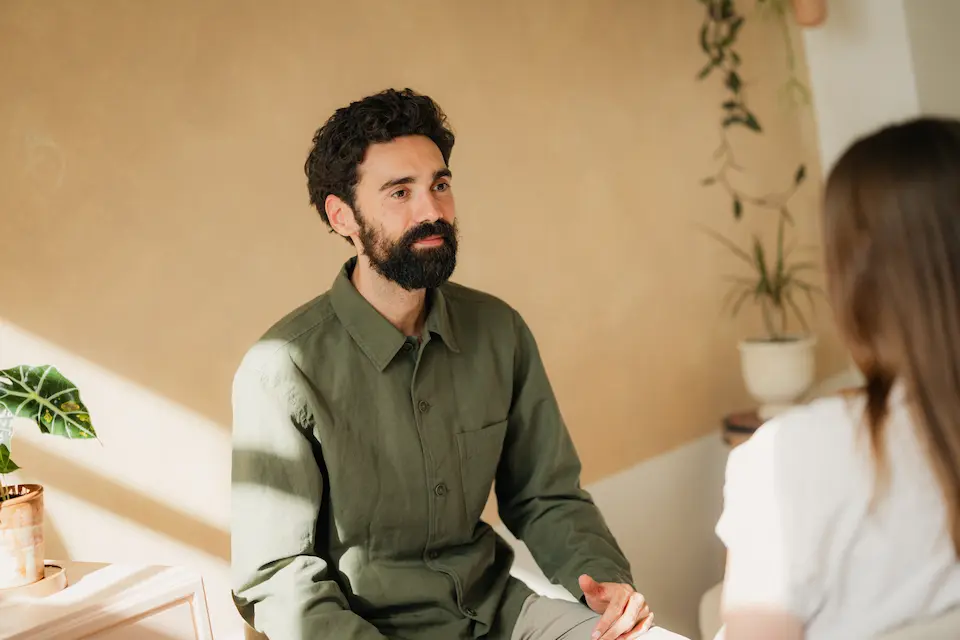
It means trying to meet what is happening with greater honesty, responsibility and compassion. Sometimes old wounds or patterns can get in the way of this.
We may explore what is true for each person, what still needs to be expressed or acknowledged, where clearer boundaries are needed and what kind of contact, if any, feels right afterwards.
I do not guide you towards any specific outcome. We orient towards what feels true and appropriate for you and for the relationship.
Conscious uncoupling support can take place with one person or with both partners. The right format depends on your situation and what you want the process to support.
For when you want clarity on your own, or when the other person does not want to participate.
For when both of you participate voluntarily and want to shape the transition together.
Conscious uncoupling cannot guarantee an amicable separation or a particular outcome. It can create more room for connection, responsibility and choice.
Understand and hold difficult emotions more fully
Recognise recurring relational patterns
Express needs and boundaries more clearly
Take responsibility without taking responsibility for everything
Reconnect with your own life and future
The work is a dynamic and non-linear process, but these three elements might give you a sense of what to expect.
You both describe what is happening and what feels important. We build a shared picture of your intention.
We look closely at specific moments: what gets activated, what happens inside each of you, and how the pattern unfolds between you.
As the dynamic becomes clearer, different ways of speaking, listening and responding can become available.
A separation can touch experiences of abandonment, rejection, shame or loss of control. In these moments, people sometimes react in ways they barely recognise in themselves.
A trauma-informed perspective can help make sense of these reactions and create more room for choice in how you want to relate to yourself and each other.
Learn more about NARM® →
My former partner and I were together for almost ten years. The ending of that relationship taught me that love and compassion do not have to disappear when a relationship changes form.
That experience shaped how I think about separation today. In our sessions, I create space to feel what is truly there, connect more deeply with your own truth, and meet yourself and each other with compassion.
More about me →No. You can also come when the question of staying or separating is still open. I will not make the decision for you. We explore what feels true for each of you and what you need in order to gain greater clarity.
Yes. Conscious uncoupling can also be an individual process. If the other person does not want to participate, we focus on your experience, your patterns and what you need for your own path forward.
No. A conscious ending does not require ongoing closeness. Sometimes a new form of connection becomes possible; sometimes greater distance or a clear ending is more appropriate.
Yes. The work can support you in understanding emotions and relational patterns, reconnecting with your needs and gradually finding more orientation in the life that is emerging after the relationship.
That depends on your situation and intention. Some people use a single session, while others choose packages of three or six. We can discuss what may fit during the free clarity call.
I work with an income-based sliding scale. You can find the current prices for individual and joint sessions on the fees page.
In a free 20-minute clarity call, you can tell me what is happening, ask questions and explore whether individual or joint support feels right.
Online · 20 minutes · No commitment